
Google introduced Ask Maps on March 12, 2026 as a new conversational layer inside Google Maps, powered by Gemini. The change matters because it shifts local discovery away from rigid keyword search and toward natural-language questions with context.
Instead of typing something generic like “coffee near me,” people can now ask longer prompts such as where to charge a phone while avoiding long lines, or which places fit a very specific plan. For local businesses, that changes how visibility works inside Maps.
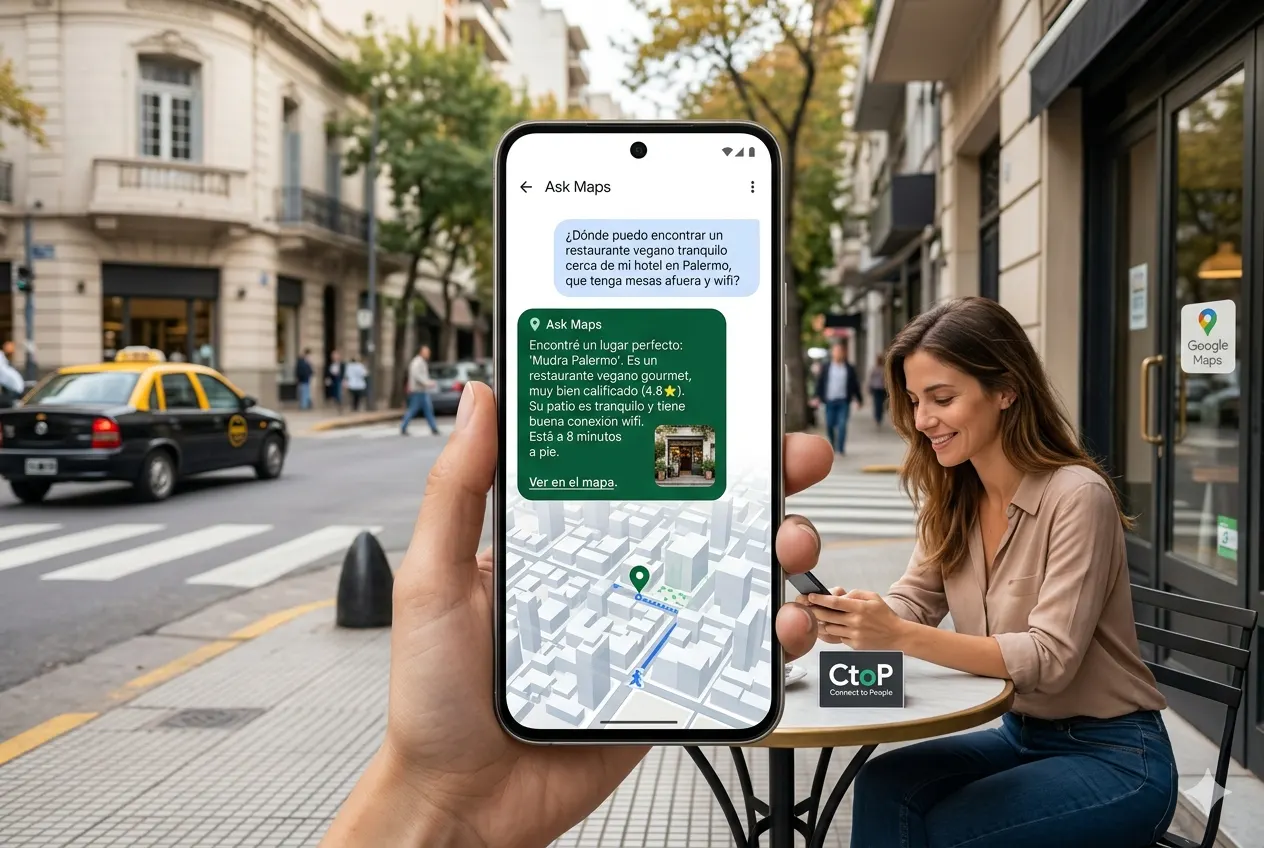
What is Ask Maps in Google Maps?
Ask Maps is a conversational AI feature built directly into Google Maps. According to Google, it answers complex real-world questions a traditional map search could not answer well before. The experience is designed around a chat-like interaction, not just a search box.
The feature uses Gemini together with Google Maps data to interpret intent, compare options and return a more useful answer with a customized map. That means Google Maps is becoming less of a directory and more of an assistant.
How Ask Maps works
Google says Ask Maps analyzes information from more than 300 million places, including reviews from more than 500 million contributors. It also personalizes results using signals like places you have searched for or saved in Maps.
Key behaviors that make the feature different:
- It accepts full natural-language prompts instead of short keyword strings.
- It can handle multiple conditions in one request, such as timing, convenience, atmosphere or route context.
- It returns a more narrative answer, paired with a map and practical actions like saving a place, booking or starting navigation.
- It supports follow-up questions, which makes discovery feel closer to a conversation than a search session.
Availability in 2026
In its official announcement on March 12, 2026, Google said Ask Maps starts rolling out in the United States and India on Android and iOS, with desktop coming soon. Google did not publish an official launch date for Argentina in that announcement, so any timing for Latin America should still be treated as tentative.
Why Ask Maps matters for local SEO
For companies in Argentina and other markets, Ask Maps raises the bar for local SEO. Visibility inside Maps is no longer just about categories, proximity and star ratings. It is also about whether your Google Business Profile contains the language, attributes and review detail that help AI answer nuanced questions.
If someone asks for a quiet cafe with plugs, fast service and easy parking, the businesses most likely to appear are the ones whose profile data and reviews clearly support those attributes. Generic reviews and incomplete profiles become less useful in that environment.
In practice, Ask Maps increases the value of:
- complete and accurate Google Business Profile information,
- detailed reviews with specific descriptive language,
- clear service, accessibility and ambiance signals,
- and consistency between your profile, your website and other local citations.
To go deeper into how to prepare your business for this new discovery model, you can explore our Google Maps optimization service.
Final take
Ask Maps in Google Maps is one of the clearest signals that local search is becoming conversational. For users, that means faster answers and more relevant recommendations. For businesses, it means local visibility will increasingly depend on how well your real-world experience is reflected in your digital profile.
